

The Calm Host’s Guide: Christmas Dinner Timeline, Guest RSVP Tracker & Master Shopping List
The lights are on. Something delicious is in the oven. Your guests are arriving — and, ideally, you aren’t discovering that all four side dishes need the same shelf.
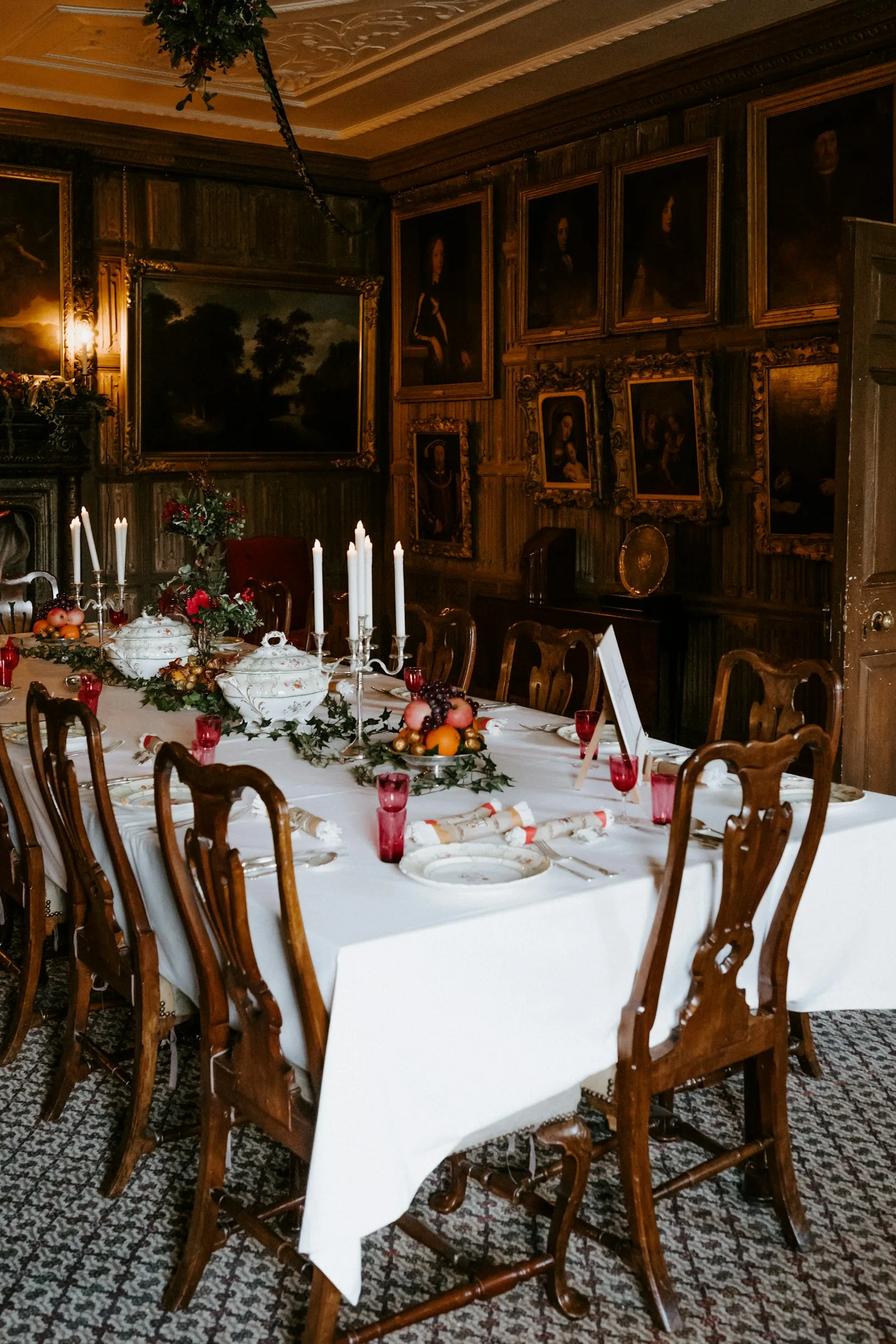
You pictured a lovely Christmas gathering: warm lights, happy chatter, people going back for seconds. Somewhere in that picture, you were also sitting down.
Then the doorbell rings, the gravy needs attention and somebody asks where the serving spoons are. You’ve apparently opened a restaurant. The staff is you.
A useful holiday party planner brings the guests, menu, shopping and timings together before they all need your attention at once. A little preparation leaves more room for the reason you invited everyone: enjoying Christmas with them.
Start with the time you want to eat. Work backwards. And give the oven a vote.
Build your Christmas dinner timeline backwards
Choose the serving time first. “Lunch sometime after presents” is a lovely mood, but it’s difficult to put in an oven schedule.
Then work back through the cooking, shopping and decisions. Use the countdown below for Christmas Day, Christmas Eve or whichever day you’re hosting.
Two weeks before: settle the big decisions
Confirm who you’re inviting, ask for replies by a specific date and collect dietary requirements. Choose the menu, agree who’s bringing what and set a food-and-drinks budget.
Buy the non-perishables you already know you’ll need. Check serving dishes, chairs and fridge space. Your beautiful bowl may be perfect for the potatoes. It cannot also hold the carrots.
If a main dish needs thawing, check its packaging now and add the required fridge-thawing time to your plan. That step may begin well before the final grocery shop.
Three days before: do the main grocery shop
Shop from one list, with quantities checked against the guest count. Collect suitable fresh ingredients, checking their use-by dates and storage instructions; leave shorter-lived items for a later top-up.
Clear fridge space before the bags come home. Putting away a Christmas food shop should not require a qualification in three-dimensional geometry.
Confirm the food contributions too. “I’ll bring something” is generous. “I’ll bring dessert for eight, ready to serve” is much easier to plan around.
The day before: make tomorrow easier
Prepare dishes your recipes explicitly allow you to make ahead, following their cooling, storage and reheating instructions. Set the table if the space is free, chill the drinks and gather serving utensils.
Write the next day’s cooking order and give small jobs to willing helpers. Someone can sort drinks. Someone can answer the door. Neither task needs to involve asking you where every glass lives.
For cooking, thawing and leftovers, use the Food Standards Agency’s Christmas food hygiene guide. Prep ahead should mean less work tomorrow, with appropriate storage today.
On the day: follow the plan, with breathing room
Check the schedule early, get the main dish underway when its recipe requires and leave time for finishing, carving or resting where appropriate. Set reminders for the jobs that are easy to miss.
Allow a little slack between tasks. Someone will arrive early. Something will need another spoon. It’s a family gathering, not a live television final.
Keep the guests out of the group-chat archaeology
The chat contains a head count, a dessert offer, a photo of somebody’s dog and fourteen messages about parking. Useful details are in there somewhere. So is an entire afternoon of searching.
Keep a guest list with each name, reply, confirmed plus-one, dietary requirements and any contribution. Ask about children and additional guests explicitly rather than guessing how many chairs a “yes” represents.
| Guest | Reply | People attending | Dietary note | Bringing |
|---|---|---|---|---|
| Sam | Confirmed | 2 | One vegetarian; ask about plus-one | Dessert for eight |
| Alex | Awaiting reply | To confirm | Ask before finalizing menu | Not agreed |
| Jo | Confirmed | 1 | None reported | Soft drinks |
This is a general template you can adapt. In Merry & Sorted, save guests, contacts, plus-ones and dietary requirements, then tick confirmed attendance as replies arrive. Keep pending replies on your follow-up list and count confirmed plus-ones separately when planning portions.
Record food contributions in the relevant menu item’s notes: who’s bringing it, how many it serves and whether it needs oven or fridge space. The app has a confirmation tick; the table above illustrates a fuller reply log you can keep alongside it.
Ask about dietary needs before choosing the menu
Ask guests directly about allergies, intolerances and other dietary needs. Keep the information clear and private, and make sure anyone bringing food understands the relevant requirements too.
For an allergy, check ingredient labels and discuss preparation and cross-contact with the guest. A vegan label alone does not establish that a product is safe for someone with a food allergy. The Food Standards Agency’s allergy guidance explains what to check.
Knowing this early makes it easier to plan a meal everyone can look forward to.
Choose a menu your kitchen can actually cook
A Christmas menu planner should help you choose a feast that fits your guests, your budget and your equipment.
Start with a main dish, a manageable set of sides and dessert. Add the extras you genuinely enjoy. Six side dishes are optional. So is proving something to the Brussels sprouts.
For each dish, record:
- How many portions you need.
- Who’s making it.
- What can be prepared ahead, according to the recipe.
- Which oven shelf, hob ring or other appliance it needs.
- Its cooking temperature, duration and any resting or reheating time.
Check the final hour especially. If every dish needs the oven at a different temperature, simplify the menu, choose compatible recipes or move a side to the hob. Spotting the clash now is cheaper than buying a second oven on Christmas Eve.
Merry & Sorted lets you save menu items with servings, ingredients and notes. Keep the practical details beside each dish, so the recipe and its job in the meal stay together.
Make one master Christmas shopping list
Separate recipe lists are how you end up buying three bags of carrots and no butter.
Bring the ingredients together, combine repeated items and subtract what’s already in your cupboards. Check quantities after adjusting recipes for your guest count. The aim is one shopping trip with a plan, rather than several increasingly emotional trips without one.
| Section | Item | Total needed | Already have | Buy |
|---|---|---|---|---|
| Produce | Carrots for two dishes | 1.5 kg | 0.5 kg | 1 kg |
| Chilled | Butter for cooking and baking | 250 g | 100 g | 150 g |
| Pantry | Stock | 1 litre prepared | Enough cubes | None |
| Drinks | Sparkling water | 4 bottles | 1 bottle | 3 bottles |
Group your own list by the layout of your supermarket: produce, chilled, pantry, bakery, drinks and household supplies. Remember things that aren’t ingredients, such as napkins or containers for leftovers, if you need them.
Save ingredients one per line and use Add to Shopping List from the menu item. Review repeated ingredients and combine quantities yourself before you shop; the transfer adds the lines rather than automatically merging them. You can export a PDF shopping list with items, categories, quantities, stores and prices. The aisle-style table above is an organizing method, not an automatic aisle-sorting feature.
Give the oven an actual schedule
Your oven has limited space and absolutely no seasonal goodwill. Write down which dishes go in when, which temperatures they need and what happens when they come out.
Use this Christmas dinner timeline as a planning frame for a 3 pm meal. Fill in the cooking slots from your chosen recipes and packaging instructions. The table organizes your day; it doesn’t supply cooking times.
| Time | What to organize | Oven and kitchen check |
|---|---|---|
| 9 am | Review recipes and the final guest count. | Confirm exact cooking start times, shelf space and temperatures. |
| Noon | Check progress against your main dish’s recipe. | Its cooking slot may start earlier or later; use the actual instructions. |
| 1 pm | Prepare the remaining ingredients and serving equipment. | Have the next trays ready; check hob and oven conflicts. |
| 2 pm | Follow the planned side-dish and reheating slots. | Use the required temperatures and allow adequate space for cooking. |
| 2.30 pm | Review doneness and the remaining finishing jobs. | Allow recipe-specific resting or carving time. Adjust serving time if needed. |
| 2.45 pm | Finish sauces and ask helpers to gather people. | Serve food only when properly cooked; handle hot and chilled dishes appropriately. |
| 3 pm | Serve, once everything is ready. | You get a chair too. |
Beside the timeline, give every oven dish its own line: dish → temperature → shelf or tray → start → finish → resting or serving step. Work backwards from 3 pm using each recipe’s timings and adjust anything that overlaps.
A large roast may need to start well before noon. A different main might need much less time. Keep the serving time flexible if the food needs longer; hungry guests can wait a little. Cooking instructions aren’t optional festive suggestions.
Save the jobs as tasks or keep a written schedule where you can see it. Merry & Sorted helps you organize the plan; you choose the cooking sequence.
Remember the rest of December is happening too
The dinner might be on the 25th. The school concert, rehearsal, work gathering and last grocery collection have other ideas.
Put each commitment in your calendar with its real start time, location and travel time. Then place shopping and prep jobs around those blocks. A free afternoon stops being free once you remember you’re taking someone to a rehearsal.
Use your planner’s event details and tasks to organize the December jobs, and check them against the calendar your household already uses. Don’t rely on a planner to notice a clash for you.
Leave one or two gaps deliberately. You might use them for a forgotten ingredient. You might get to wander past the lights with a warm drink. Both are better than discovering you booked three things into the same hour.
Your ten-minute hosting reset
Before you add another elaborate side dish, do this quick pass:
- Choose the gathering date and target serving time.
- Write the guest list and follow up on missing replies.
- Confirm dietary needs and agreed food contributions.
- Pick a menu that fits your kitchen and budget.
- Combine ingredients into one shopping list.
- Schedule the main shop, make-ahead work and recipe-based cooking slots.
- Give at least one job to someone else.
Then decide what you’re looking forward to. The first slice of dessert? A noisy table? Everyone lingering over coffee?
Make room for that part too. You’re hosting Christmas, and you’re allowed to enjoy it.
Christmas hosting FAQs
When should I start my Christmas dinner timeline?
About two weeks ahead is a useful starting point for guests, dietary needs and the menu. Move earlier for food orders or anything with a long lead time. On the day, calculate cooking start times from the actual recipes and packaging instructions.
What can I prepare on Christmas Eve?
Choose dishes your recipes say can be made ahead, and follow their storage and reheating instructions. You can also set the table, organize serving utensils and finish non-food jobs. Make-ahead suitability varies by dish.
How do I keep track of RSVPs and plus-ones?
Record replies against names and confirm how many people each reply covers. In Merry & Sorted, use the guest confirmation tick and plus-one field. Follow up on unconfirmed names before calculating portions.
Does Merry & Sorted automatically combine recipe ingredients?
The menu’s Add to Shopping List action transfers ingredient lines. Check duplicates and combine quantities yourself before exporting the PDF list.
What if everything needs the oven at once?
Compare temperatures, cooking durations and tray space before the day. Choose compatible recipes, simplify a side, use another suitable appliance or adjust the serving time. Build the slots around the recipes rather than squeezing the recipes into an optimistic schedule.